Why Your RV Water Heater Needs a Flush, and How Often to Do It
Sediment builds up quietly in RV water heaters. A yearly flush keeps hot water flowing and extends tank life.
Your RV water heater is one of the hardest-working appliances in the rig, and one of the most ignored. It sits behind a small exterior door, does its job quietly, and usually gets attention only when hot water runs out too soon or starts to smell. A regular flush prevents most of those problems.
Where sediment comes from
Every time you fill your fresh tank or hook up to city water, minerals come along with the water. When that water is heated, minerals like calcium and magnesium separate out and settle at the bottom of the tank as sediment. Water across Wyoming and Northern Colorado varies widely from source to source, and filling from different campgrounds and wells adds up.
Over time, that sediment layer insulates the water from the burner or heating element. The heater works harder, takes longer to recover, and holds less usable hot water.
Anode rods
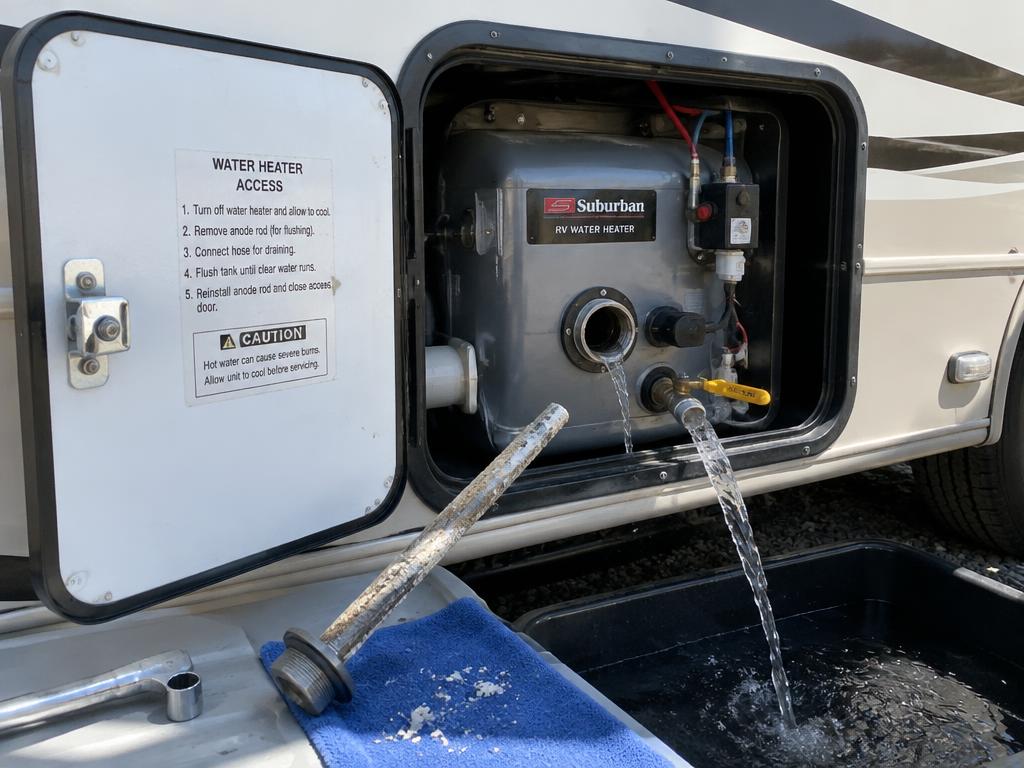
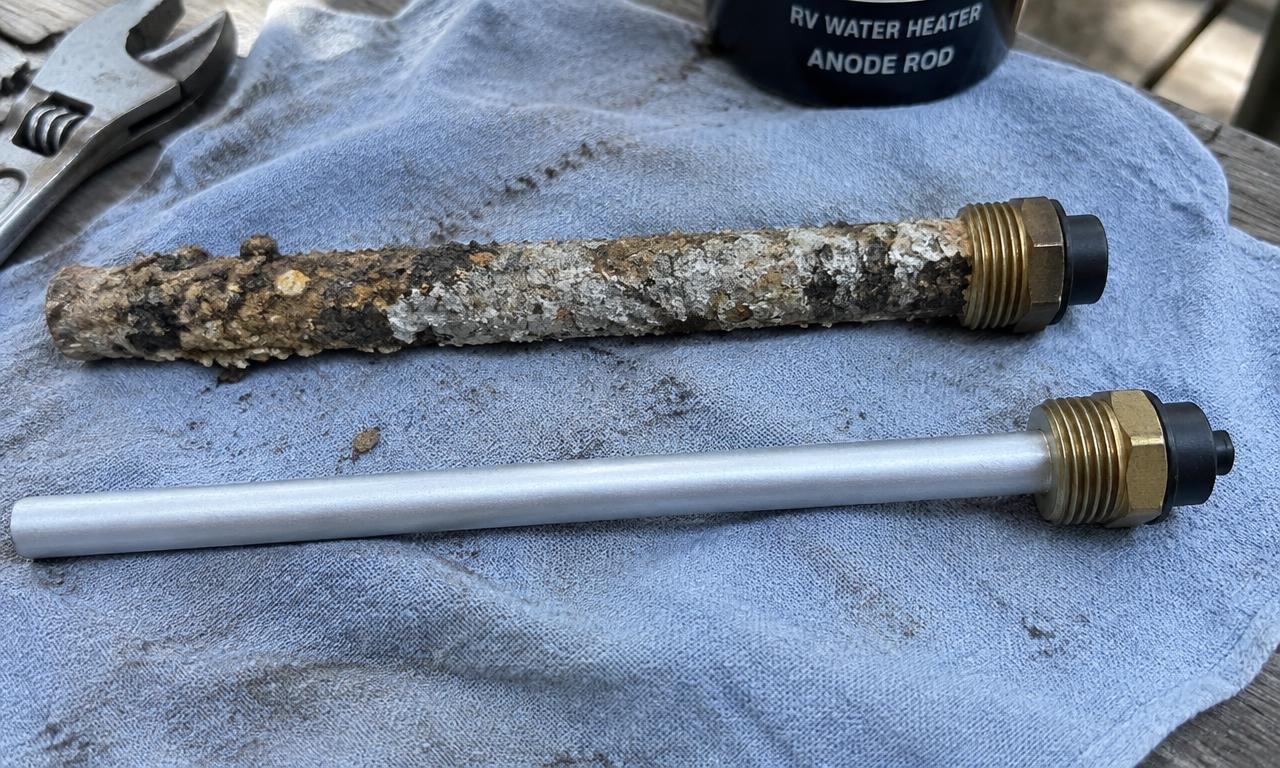
Many RV water heaters with steel tanks use an anode rod. The rod is designed to corrode instead of the tank, sacrificing itself to protect the tank lining. When the rod is mostly eaten away, the tank itself starts to corrode. Checking the anode during a flush shows how much life it has left. Some heaters use aluminum tanks that don't require an anode, so it depends on your model.
Signs your water heater needs attention
- Popping, rumbling, or crackling sounds while it heats
- Hot water that runs out faster than it used to
- Rusty or cloudy hot water
- A rotten-egg smell from hot water only
- White flakes or grit coming out of faucets
The rotten-egg smell is often caused by a reaction between bacteria in the water and certain anode materials. Flushing and sanitizing usually helps.
Draining safely
If you want to drain the tank yourself, safety comes first. Turn off the water heater on both gas and electric, and let it cool completely. Hot water under pressure can cause serious burns. Turn off the water pump and disconnect city water. Open a hot faucet inside to relieve pressure, then open the pressure relief valve at the heater. Only then remove the drain plug or anode rod.
Never turn a water heater back on until the tank is completely full of water again. Running an empty electric element can burn it out in seconds.
How often to flush
Once a year is a good baseline. If you camp often, fill from hard water sources, or live in your rig full-time, consider doing it more often. Many owners pair it with de-winterization in spring.
What a flush and service includes
- Full tank drain and sediment flush
- Anode rod inspection, if your tank uses one
- Inspection of components and connections
- Function test and temperature check
What to notice after the service
After the tank is refilled, purge air at a hot faucet before turning the heater on. Watch the exterior compartment and the floor around the heater while the system comes up to pressure. A slow drip at the drain plug, pressure relief valve, or a nearby fitting should be corrected before it wets the surrounding structure. Once hot, compare recovery time and water clarity with what you were getting before the flush.
A flush is also a useful time to inspect the exterior door, burner area, wiring, and combustion openings. Keep leaves, insect nests, and stored items away from those openings. Do not adjust propane components without the right tools and training. If odor returns quickly after sanitizing, or sediment is unusually heavy, the water source, anode material, and tank condition may all need to be considered together.
Keep the fresh-water system in the picture
Water-heater maintenance works best as part of the whole fresh-water system. Drain stale water before storage, use a potable-water hose, and keep the fill connection clean. If both hot and cold water smell or look cloudy, the issue may be in the fresh tank or supply rather than the heater alone. Tank sanitization can address that broader problem. Before a trip, run every faucet on both hot and cold, check beneath sinks for drips, and confirm the pump stops after pressure builds. That short test can reveal a loose fitting before road vibration makes it worse.
When to call a pro
If your heater won't light, trips its breaker, leaks around the tank or fittings, or still struggles after a flush, it's time for a professional look. Our water heater flush and service starts at $150 and usually takes 45 to 75 minutes. If the heater needs repair, appliance repair starts at $150 with parts quoted separately.
Ready for better hot water? Call (855) 681-0474 and we'll come to you.
Need a hand with this?
We come to your rig anywhere within 50 miles of Cheyenne, and farther with a trip charge.