Does RV Solar Still Work in a Wyoming Winter?
Yes, but shorter days, low sun, snow, and cold batteries all change the math. Here's what to expect and how to plan.
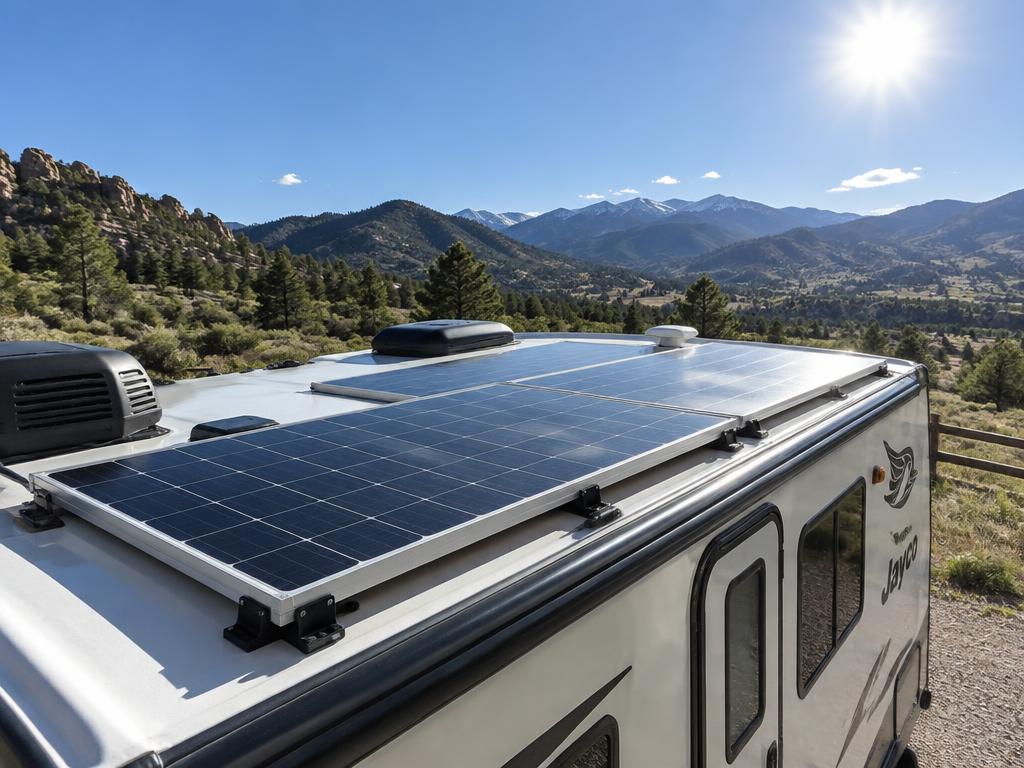
Wyoming gets a lot of sunshine, and that's one reason solar is popular with RVers here. But winter is a different season for solar. Owners who rely on their panels in summer are sometimes surprised when the same system struggles in December. The short answer is that solar does work in winter, but you need to understand what changes and plan for it.
Shorter days and a low sun
In winter, there are fewer daylight hours, and the sun sits lower in the sky. Flat-mounted panels on an RV roof catch the low winter sun at a steep angle, which reduces how much energy they collect. The result is that the same panels produce noticeably less power per day than they do in June.
Some owners use tilting mounts to angle panels toward the winter sun when parked for longer periods. Portable panels that can be set up and aimed are another option.
Snow on the panels
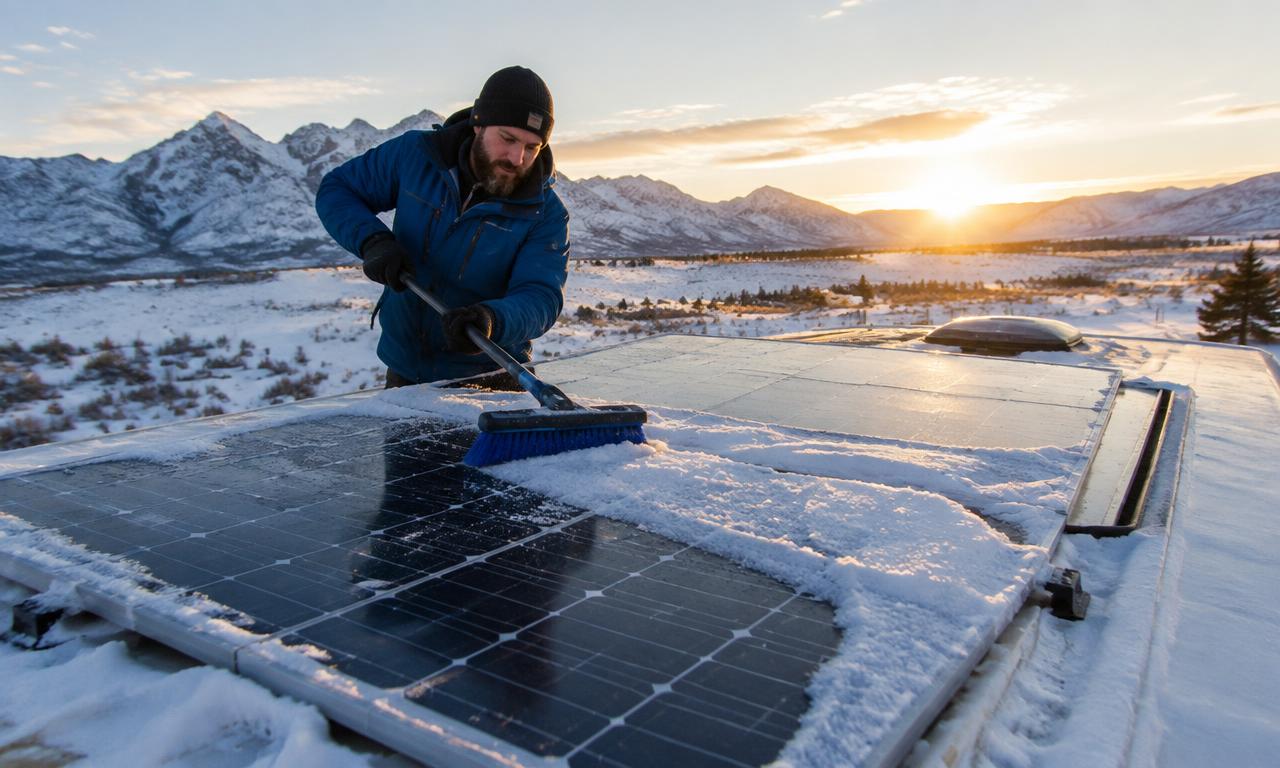
Even a thin layer of snow blocks most light. Panels on a dark roof sometimes shed snow on their own as the sun warms them, but you can't count on it. If you need power, carefully brush snow off with a soft brush on a long handle. Avoid scraping with anything hard that could scratch the glass.
The upside of cold weather is that solar panels are actually more efficient at lower temperatures. On a clear, cold day with clean panels, output can be quite good for the hours of sun available.
Cold and battery chemistry
Batteries are often the weak point in winter. Lead-acid batteries lose usable capacity in the cold, and a discharged lead-acid battery can freeze. Lithium iron phosphate batteries handle discharge well, but most should not be charged below freezing unless they have built-in heating or a low-temperature charging cutoff. Charging a cold lithium battery without protection can damage it.
Know what type of battery you have and what its manufacturer says about cold charging. This one detail decides how your system should be set up for winter.
Charge controllers
The charge controller manages how solar power gets into your batteries. Make sure its settings match your battery type, and if you have lithium, that it supports temperature sensing or communicates with the battery management system. A controller set up for lead-acid charging a lithium bank, or the other way around, can cause poor charging or shortened battery life.
Sizing for winter use
If you plan to camp off-grid in winter, size your system for winter conditions, not summer ones. That usually means more panel capacity, more battery storage, or both, plus a realistic look at your power use. Furnace blowers, for example, draw significant 12-volt power on cold nights.
What you can check yourself
- Keep panels clean and clear of snow when you need power
- Check the charge controller display for daily production and errors
- Know your battery type and its cold-charging limits
- Watch battery voltage on cold mornings
- Tighten and inspect visible wiring connections for corrosion
Make a realistic winter power budget
Start by listing the loads that must run after sunset: furnace blower, lights, water pump, refrigerator controls, device charging, and any medical or communication equipment. Watch your battery monitor through one cold evening and again the next morning. The overnight change tells you more than a summer estimate because the furnace may cycle often and the battery itself may provide less usable capacity in the cold.
Then compare that overnight use with what the panels replace during a clear winter day. Repeat the check after a cloudy day. If the system only recovers under perfect skies, plan a backup charging source or reduce loads rather than assuming tomorrow will be sunny. Keep wiring protected from ice and abrasion, and never climb onto a snowy roof. Clear panels from a stable position only when you can do so safely.
Why a solar consultation helps
A consultation looks at how you actually camp and what you actually power, then sizes a system around that, including winter use if you need it. Our solar consultation starts at $75 and covers a power usage assessment, sizing recommendations, component and budget guidance, and installation considerations. If an existing system isn't charging the way it should, solar repair starts at $150 with parts quoted separately. Battery service and inverter inspection starts at $75.
Want to know what your system can really do this winter? Call (855) 681-0474 and we'll take a look.
Need a hand with this?
We come to your rig anywhere within 50 miles of Cheyenne, and farther with a trip charge.