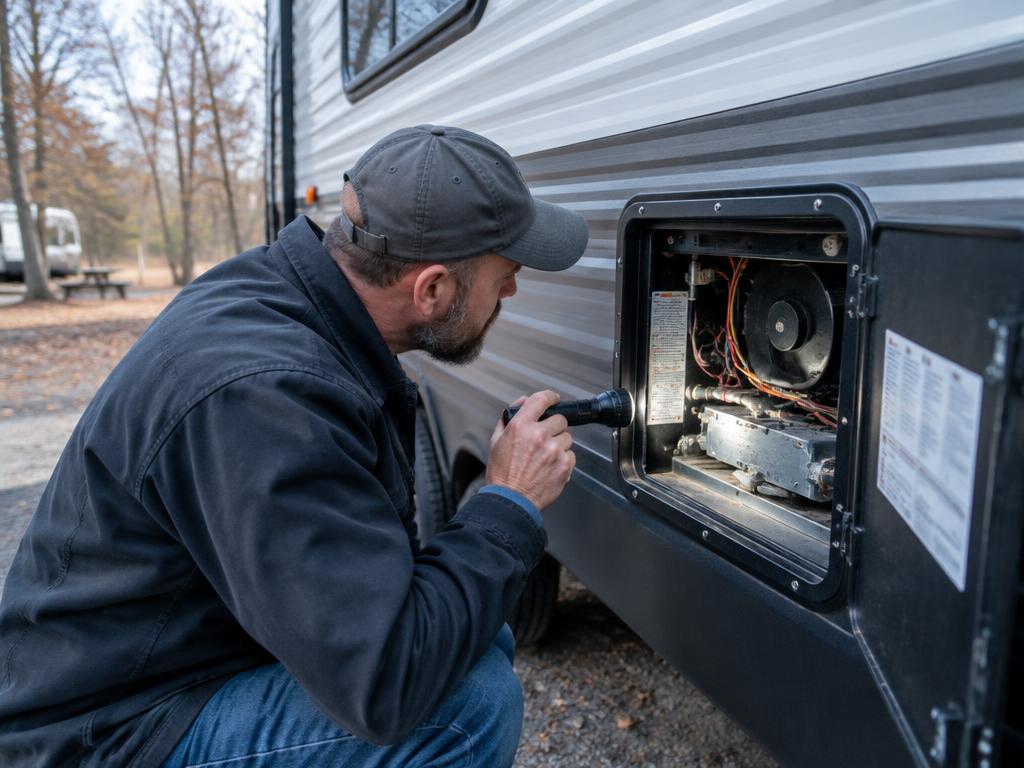
RV Furnace Won't Light? A Fall Checklist for Cold Wyoming and Colorado Nights
The fan runs but no heat? Work through propane, power, airflow, and ignition before the first cold night catches you.
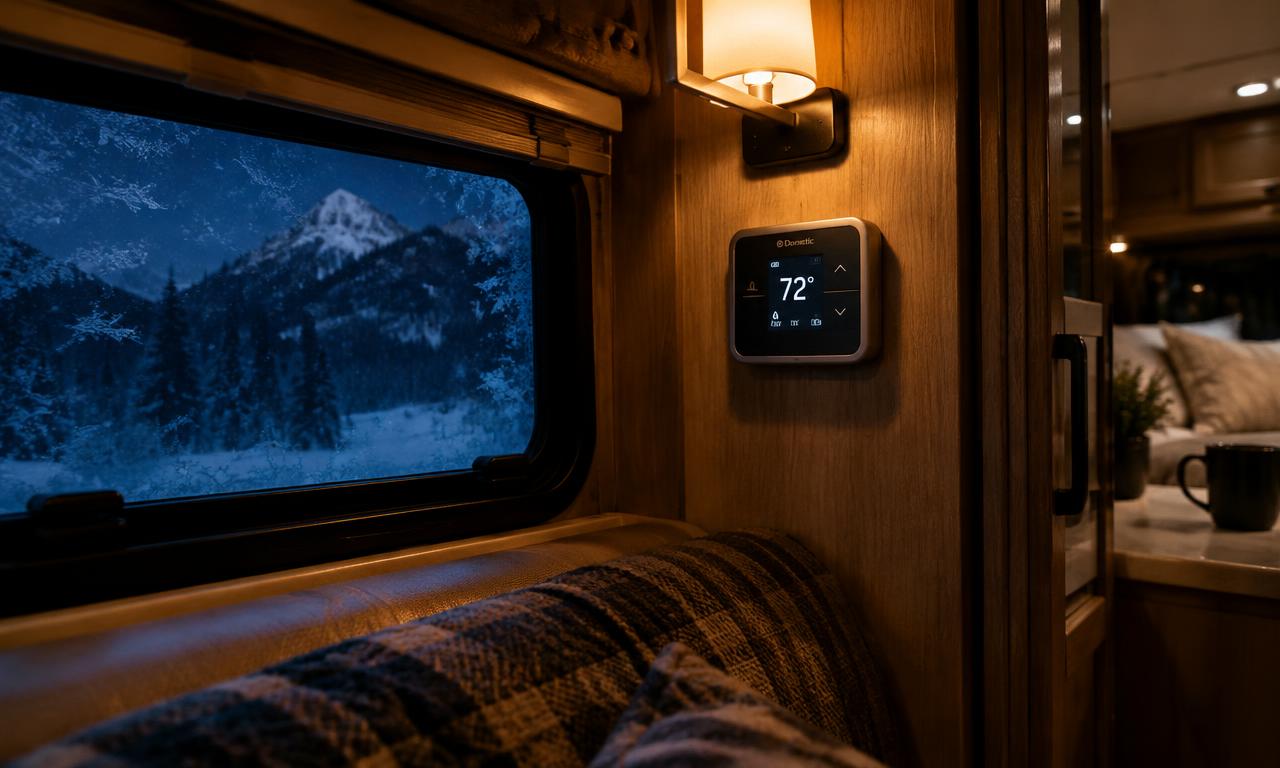
Fall in the high country is beautiful, and it's also when RV furnaces get their first real test of the year. Nights at elevation drop quickly once the sun goes down, and discovering that your furnace won't light at 10 PM at a campground is not a good way to end the day. Most furnace problems come down to a handful of causes, and many can be checked before you leave home.
How an RV furnace works, briefly
When the thermostat calls for heat, the furnace blower starts. Once the blower moves enough air, a sail switch closes, confirming airflow. Then the control board opens the gas valve and tries to ignite the burner. If ignition is confirmed, the burner stays lit and heat flows. If any step fails, the furnace shuts down for safety, often after a few attempts.
1. Propane supply
Start with the obvious. Check that the tank has propane and that the valve is fully open. If other propane appliances like the stove work, supply is likely fine. If the stove burners light but sputter, there may be air in the line, which is common after a tank swap or at the start of a season. Lighting a stove burner for a minute can help purge it.
2. Battery voltage
This surprises a lot of people. RV furnaces run on propane for heat, but the blower and control board run on 12-volt power. If battery voltage is low, the blower may spin too slowly to close the sail switch, and the furnace will never try to light. Cold weather also reduces battery capacity. If your furnace fan sounds sluggish, check the battery first.
3. Sail switch and airflow
Anything that restricts airflow can keep the sail switch from closing. Look for blocked return air vents, closed floor registers, or debris in the intake. Insects, especially wasps and spiders, love to build nests in furnace exhaust and intake openings over the summer. A quick look at the exterior furnace vent can reveal a lot.
4. Thermostat
Make sure the thermostat is set to heat and set several degrees above the current temperature. On digital thermostats, check that the furnace option is selected and not a heat pump mode if your rig has both. Fresh batteries in the thermostat, if it uses them, rule out an easy problem.
5. Ignition
If you hear the blower run, then a click or series of clicks but no ignition, the problem could be the igniter, the gas valve, a dirty burner, or the control board. Many furnaces will make three attempts and then lock out. This is where troubleshooting starts to need meters and some experience.
Safety and carbon monoxide
Never block furnace vents, and never use the stove or oven as a heat source. Make sure your carbon monoxide detector is working and test it at the start of each season. If you ever smell propane, shut off the supply at the tank, open windows, and get out of the rig before doing anything else.
Your fall checklist
- Confirm propane supply and purge air if needed
- Check battery charge and connections
- Clear return air vents and floor registers
- Inspect exterior vent for nests or debris
- Set thermostat correctly and test
- Test CO and propane detectors
- Run the furnace for a full cycle at home before your first cold trip
Test it before the weather turns
Give the furnace a full test while the daytime weather is still comfortable. Start with a charged battery and enough propane, open every heat register, and set the thermostat high enough to call for heat. Listen to the sequence: blower first, then ignition, then steady warm air. Let it complete a full cycle and shut down on its own. A brief dusty smell at the first start of the season can be normal, but smoke, a strong electrical odor, or repeated lockouts are not.
Also pay attention to cycling. A furnace that starts and stops every few minutes may have restricted airflow, a thermostat problem, or another condition that needs diagnosis. Compare airflow at several registers and make sure stored gear has not covered a return opening. Write down what you hear and how long each stage lasts. Those details help a technician narrow the problem without guessing.
When a tune-up makes sense
A yearly furnace tune-up catches the things owners can't easily see: burner condition, ignition components, ductwork airflow, thermostat function, and the safety and carbon monoxide components. Our furnace tune-up starts at $150 and usually takes 45 to 75 minutes. If something needs repair, we explain what we found and quote it before doing more.
Don't wait for the first cold night to find out. Call (855) 681-0474 and we'll get your furnace ready wherever your rig is parked.
Need a hand with this?
We come to your rig anywhere within 50 miles of Cheyenne, and farther with a trip charge.